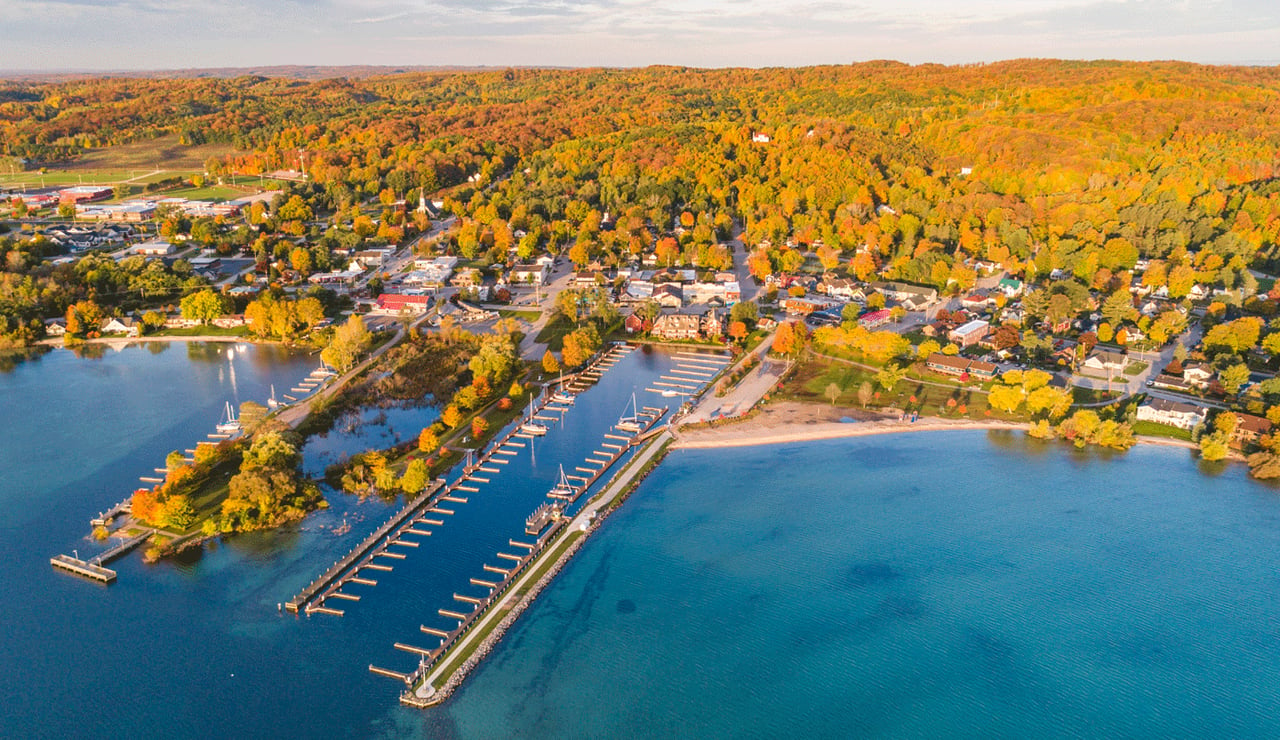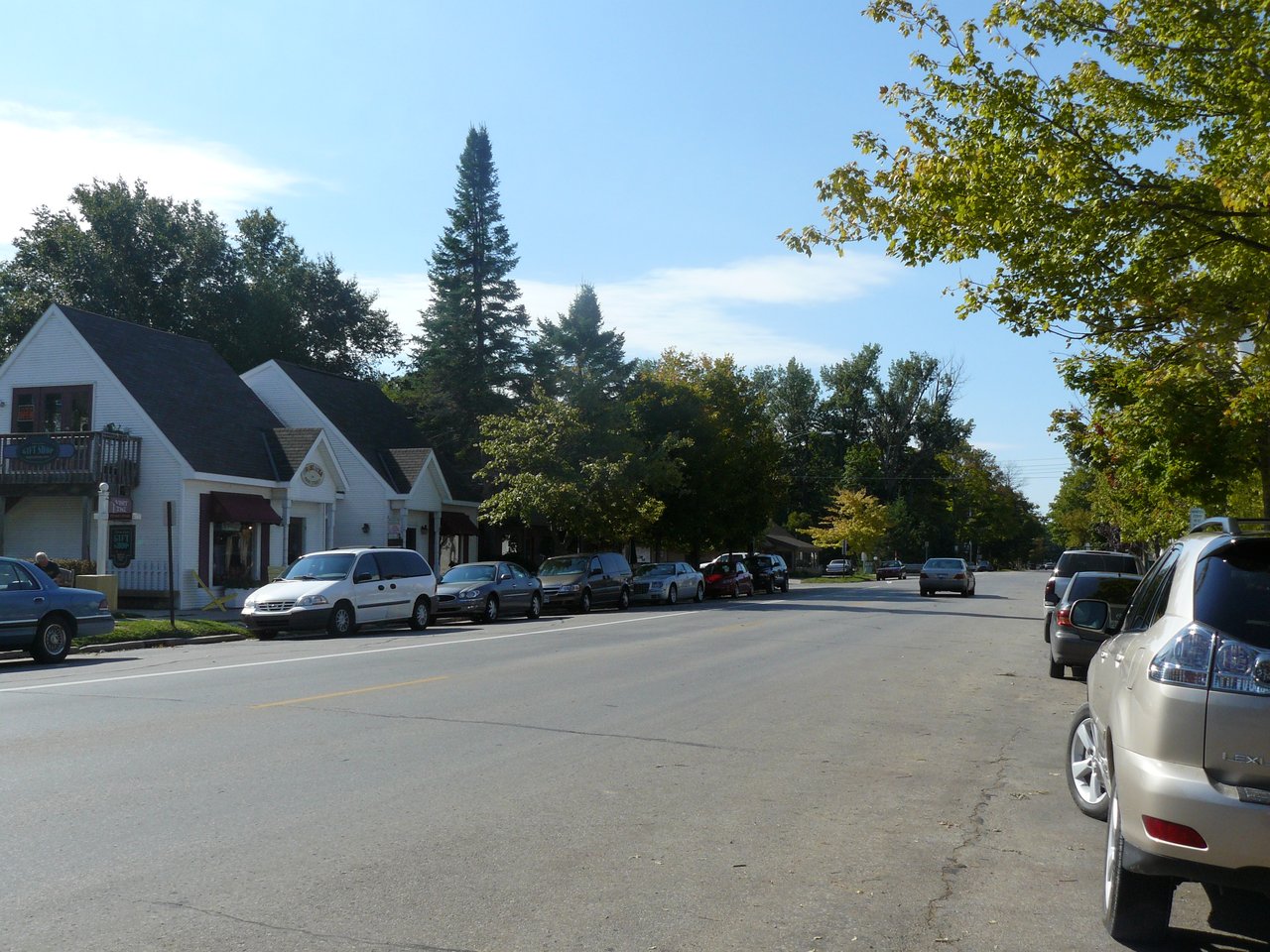
Every listing photo of downtown Leland features the same two blocks. The weathered shanties of Fishtown in the background, a glimpse of Lake Street, maybe a corner of the Bluebird's dining room through a window. It is the most photographed, most walked, most wanted stretch of real estate in the township. It is also, according to Leland Township's own supervisor, the stretch of pavement least likely to meet current road code.
That is not a knock on the neighborhood. It is the starting point for understanding something buyers comparing Leland to other Leelanau villages have not had reason to ask about yet: the township just launched a formal, funded process to document exactly how far behind those streets have fallen, and to start pricing out what fixing them will cost.
A Corridor With a Name Now
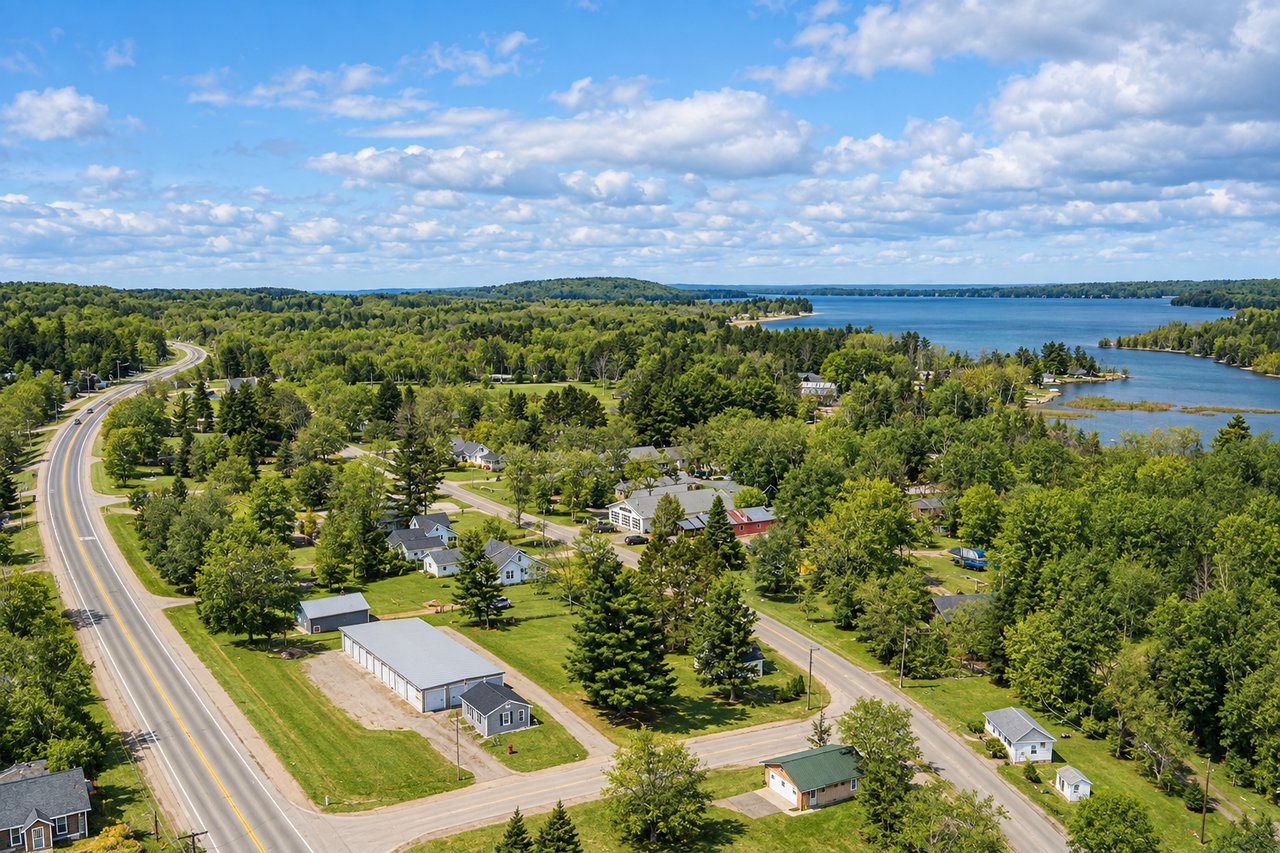
Leland Township held a three day stakeholder workshop the week of June 8 through 10, 2026, kicking off what officials are calling the Streetscape Master Plan. The study area is specific: the downtown corridor bounded by Reynolds Street and Hill Street, and by Lake Michigan and M-22. Inside that box sit North Street, Lake Street, and the short east-west connectors that tie M-22 into the heart of downtown, according to Township Supervisor Clint Mitchell, speaking to the Leelanau Ticker.
Mitchell was candid about the condition of those streets, describing several as crumbling and not up to code on width. An architect, an urban planner, and civil engineers spent the workshop assessing what it would take to bring them into compliance, while also weighing parking, pedestrian flow, and drainage. The output will be a map of which streets need rebuilding, what that process looks like, and what it costs. Mitchell's own estimate: likely into the millions.
The plan's next milestone is formal adoption at the township's regular board meeting this month. That is the same meeting cycle happening right now, which makes this less a historical footnote and more a live process a downtown buyer should be tracking before writing an offer.
Why the Standard Rating System Misses These Streets
Understanding how the county evaluates its roads helps explain the gap. Leelanau County road maintenance runs on a system called PASER, short for Pavement Surface Evaluation and Rating, administered by the Leelanau County Road Commission. Roads get scored one to ten, and townships use those scores to decide where maintenance dollars go.
The catch, per Mitchell, is that PASER assumes the road in question is already up to code. Downtown Leland's oldest streets predate that assumption. They were laid out for a much smaller village, long before modern width and drainage standards existed, and the standard scoring system was never built to flag them. In effect, the streets carrying the most foot traffic and the highest property values have been sitting outside the normal maintenance queue, not because nobody noticed, but because the tool used to notice things like this was not designed to see them.
That is the real story behind the plan. It is not that Leland's downtown has been neglected. It is that the corridor everyone wants to buy into has quietly been running on infrastructure the standard system cannot properly grade, and the township is now building a separate process just to grade it.
Who Showed Up to the Table
The list of stakeholders invited into the workshop tells you who has a direct stake in how this plays out. Alongside the Leland Township Board, the roster included the Fishtown Preservation Society, the Leland Chamber of Commerce, and representatives of Leland's cultural overlay district, the Old Art Building, the Leelanau Historical Society, and the Leland Public Library. Named business and property owners at the table included Skip Telgard of the Bluebird, Ben and Caroline Maier of Benjamin Maier Ceramics, and George Cochran of The Riverside Inn.
For buyers, the roster alone does not establish how the work will be phased; the construction schedule remains to be determined.
The Corridor Is Already Absorbing Capital
The streetscape plan is not the only money moving into this footprint. The Fishtown Preservation Society quietly raised $2.2 million to purchase the Van Raalte House at 101 South Lake Street, a three-lot, 0.48 acre property built in 1960 that sits directly adjacent to the south side of Fishtown, first reported by the Leelanau Ticker in October 2025. As of that report, the organization was in a second fundraising phase to raise roughly $1,067,000 to convert the home into a new operations center meeting modern code and ADA requirements, with $420,000 remaining. The plan then was to close the gap by the end of October 2025, begin renovations before year's end, and have the building ready by late 2026.
Executive Director Amanda Holmes has said the new site gives Fishtown Preservation something it has never had: direct access to Lake Leelanau via a dock above the Leland Dam, opening the door to new programming the organization has not previously been able to offer.
Two separate capital projects, one township-led and one nonprofit-led, are converging on the same few blocks within the same stretch of time. That is not evidence the neighborhood is struggling. It is evidence the corridor is entering an active phase of reinvestment, which is exactly the kind of signal a buyer weighing Leland against a quieter Leelanau village should want to know about before it shows up in the price.
What to Ask Before You Write an Offer Downtown
If you are looking at property inside the Reynolds to Hill, Lake Michigan to M-22 footprint, a few questions belong in your due diligence alongside the usual inspection and title work.
- Does the property's street frontage fall inside the streetscape study area, and has it come up by name in any of the public workshop materials.
- Has the township board discussed how the eventual construction costs will be funded, whether through general revenue, grants, or a special assessment on adjacent property owners.
- What is the expected phasing and timeline once the plan is formally adopted, and does that timeline overlap with when you would want to close or begin any renovation of your own.
- Are there parking or access changes contemplated for the block, since the workshop scope explicitly included parking and pedestrian traffic alongside road width.
None of these questions require alarm. They require the same kind of local fluency you would want before buying next to any active public works project, timed correctly and asked before you are under contract rather than after.
A Few Straight Answers
Will downtown property owners be assessed for the road work? That has not been decided publicly as of this writing. The township has said the master plan will include cost figures and phasing, but has not announced a funding mechanism.
When does construction actually start? Adoption of the plan itself is the current milestone, expected at the township's August 2026 board meeting. Construction timing depends on what the adopted plan lays out and how funding gets resolved, and has not been scheduled.
Does this affect Fishtown itself? Fishtown's core historic district is a separate, protected footprint from the surrounding street grid, though the Fishtown Preservation Society was a named stakeholder in the streetscape workshop given its adjacency and its own concurrent expansion into the Van Raalte House.
Leland's downtown is not becoming less desirable because of any of this. If anything, a township willing to name its own infrastructure gap and fund a real planning process is doing the opposite of neglect. But a buyer who understands the corridor is mid-process, rather than finished, is a buyer who negotiates from a stronger position and times their close with fewer surprises.
If you are comparing Leland to another Leelanau village and want a read on what a specific address inside or outside this study area means for your timeline, the team at Schaub Team Premier Realty knows these blocks and these board meetings well enough to walk you through it. Reach out for a free property valuation before you write your next offer.
This article is general information, not legal, tax or financial advice. Consult a qualified professional about your situation.