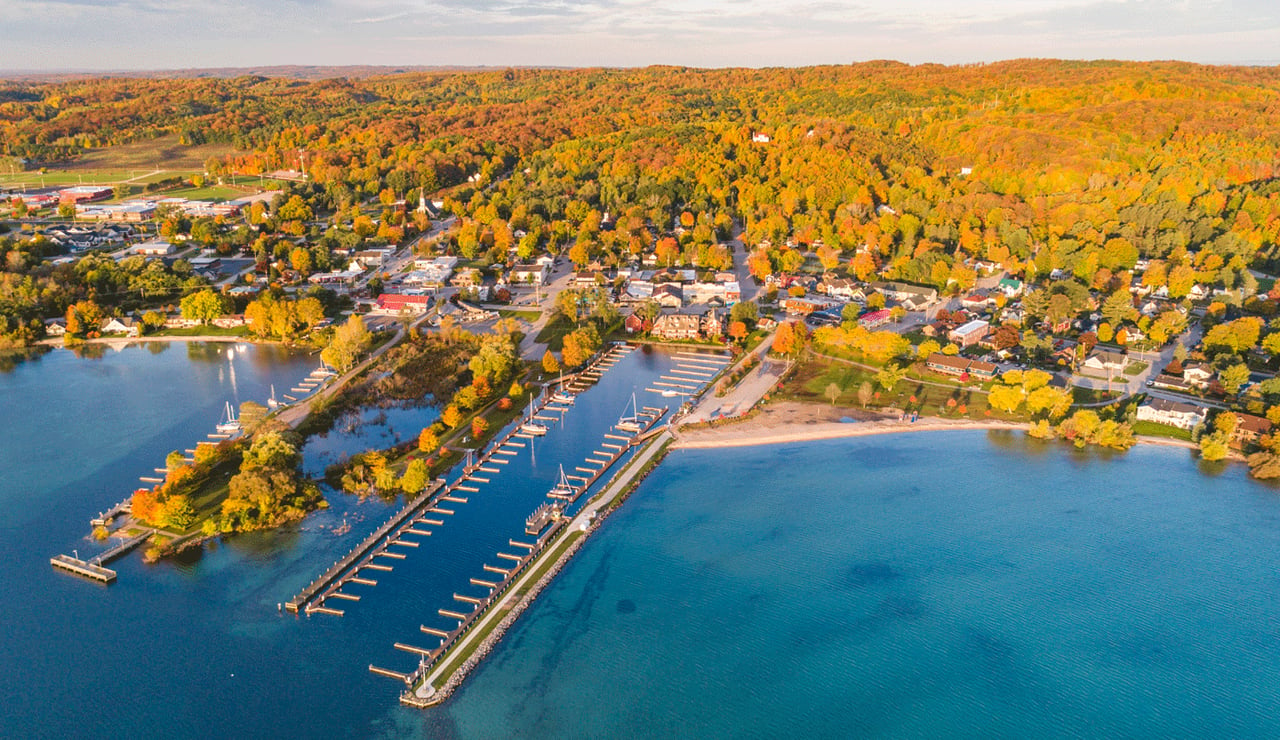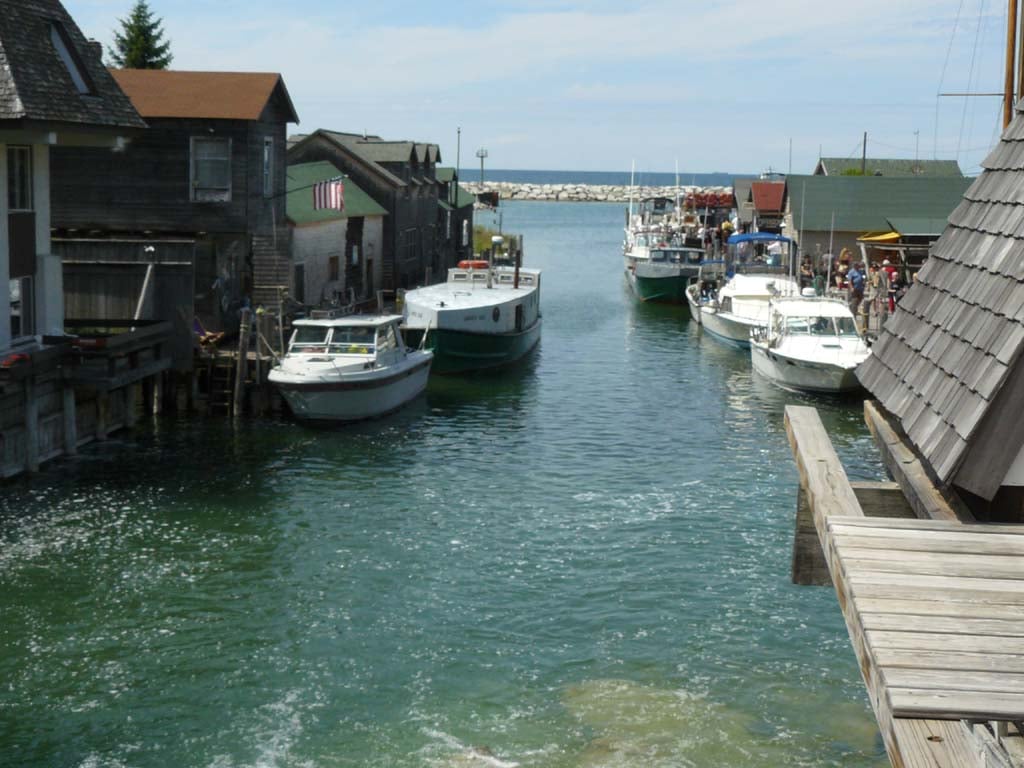
If you'd walked the Fishtown docks on any weekday morning this past August, you'd have seen the green tug Joy tied up where it always sits, smelling faintly of diesel and lake water. What you might not have noticed, unless you knew to look, is that the boat is only checking five trap nets this season. Fishtown Preservation Society, the nonprofit that owns the Joy and holds its state license, is permitted to fish ten.
That gap between what's licensed and what's actually happening on the water is the real story behind the shanties most people photograph and move past. Fishtown isn't a museum. It's a working operation held together by one boat, one fisherman, a nonprofit's balance sheet, and a piece of state law that almost didn't get written the way it did.
Ten Nets on the License, Five in the Water
Joel Petersen is a fourth-generation commercial fisherman who splits his time between Leland and Muskegon, and he's been captaining the Joy since the fall of 2007, when he and a cousin drove north to convince Fishtown Preservation Society to start using the fishing licenses it had just acquired before the state could take them back. The boats needed restoration first. Petersen and welder Geoff Niessink handled that work themselves, and the Joy and its sister boat, the Janice Sue, were back on the water by 2009.
The arrangement today is simple on paper and precarious in practice. Fishtown Preservation Society, run since 2007 by executive director Amanda Holmes, owns both boats and the licenses that let them fish at all. Petersen operates the Joy under an agreement with the nonprofit and keeps a percentage of what he catches. During the active season, which typically runs April through September, the Joy goes out once a week to check the whitefish trap nets. The license allows up to ten nets in the water at a time. This season, only five are actually set.
The Janice Sue tells a quieter version of the same story. It's licensed for small-mesh gill nets targeting chub, but the local chub population collapsed in the early 1970s and never came back. The boat last fished for chub out of Leland in 2010. It sits at the dock now as a working vessel in name, kept in repair, but not earning its keep the way the Joy does.
The Law That Decided Whether Any of This Happens at All
None of this was guaranteed. On December 8, 2020, the Michigan DNR issued Fisheries Order 243.21, cutting the legal depth for trap nets from 150 feet to 80 feet and closing the whitefish season from October 1 through December 10. Petersen said publicly at the time that losing access to deeper water and the month of October alone would be enough to end the operation. The Michigan Fish Producers Association, of which Fishtown Preservation is a member, filed a class action lawsuit against the DNR alleging the order was retaliation for the industry's opposition to earlier legislation.
The DNR granted a one-year reprieve in February 2021, restoring the old rules through that season only. It wasn't a fix. It left commercial fishers wondering whether the next winter would bring another order rewriting the rules again.
The actual resolution came in March 2022, when Governor Whitmer signed Senate Bill 251 into law as Public Act 34. The act permanently set the trap net depth limit back at 150 feet and narrowed the closed whitefish season to November only, opening back up the October window that the 2020 order had shut. The important detail for anyone who lives near Fishtown is where these numbers now live. They're written into the Michigan Compiled Laws themselves, not left to an annual DNR order that can be rewritten each winter. The boat you see at the dock no longer depends on whichever fisheries order gets issued in December.
That legal stability didn't change the economics. Whitefish stocks in Lake Michigan have been thinning for years under pressure from invasive quagga and zebra mussels, and the math on five nets instead of ten reflects a fishery that can survive on paper but still struggles to turn a full profit on the water. Statewide, 2025 reporting from Bridge Michigan counted just 13 full-time commercial fishing businesses left operating on the Great Lakes, most of them family run, a fraction of what the industry once was.
Where the Whitefish Actually Goes
Follow the catch from the Joy's deck and it doesn't go far. Petersen unloads whitefish once or twice a week at Carlson's Fishery, a few feet down the dock. Carlson's has been a Fishtown fixture since 1904 and is now run by fifth-generation owner Nels Carlson, with Michael Burda joining as co-owner about seven years ago. The business shifted over time from a wholesale operation to a retail storefront that also sells to local restaurants. One of those buyers is the Leland Lodge, which serves the whitefish Petersen caught that same week.
A few doors down, Village Cheese Shanty runs on the same family logic. Tatum and Owen Kareck grew up working the shop their parents run, and both are back in Leland today managing it themselves with an eye toward eventually taking it over outright. Neither business depends on the Joy directly, but both depend on the same thing the boat represents: a working waterfront where the shops aren't simply leasing a historic backdrop, they're part of the operation.
A few things worth knowing if you've never traced it through:
- The Joy fishes whitefish trap nets under a Fishtown Preservation Society license, active roughly April through September, with nets checked weekly.
- The Janice Sue is licensed for chub but hasn't fished commercially since 2010, since the local chub fishery collapsed decades ago.
- Carlson's Fishery buys directly from the Joy and supplies both walk-in customers and area restaurants, including the Leland Lodge.
- Fishtown Preservation Society, a 501(c)3, owns both boats and their licenses outright. Without that nonprofit structure, there's no license in Leland to fish under at all.
A New Front Door for an Old Fight
While the daily fishing operation runs lean, the organization behind it is making a long-term bet. In late 2025, Fishtown Preservation Society purchased the historic Van Raalte House at 101 South Lake Street, just south of Fishtown on the Leland River above the dam. The nonprofit had rented its office space from the Leelanau Historical Society since 2007. The Van Raalte House, built in 1960, becomes its first permanent headquarters, with plans for research space, a volunteer and apprenticeship program, and dock access that opens the door to environmental programming on Lake Leelanau itself. The move-in target is late 2026.
It's a strange juxtaposition if you sit with it. An organization running its flagship fishing license at half capacity is simultaneously investing in a permanent home built to last decades. That's not a contradiction so much as how Fishtown actually works. The shanties and the boats aren't preserved the way you'd preserve an artifact behind glass. They're kept alive the way a family business stays open, by absorbing lean years and betting that the next generation, whether that's someone learning to pull nets or Nels Carlson's own succession someday, will have something worth showing up for.
Next time you're on the docks, count the floats marking the trap nets and you'll have a rough sense of how the season is going before anyone tells you. Fishtown isn't performing its history for visitors. It's running it, five nets at a time, on a license that survived a fight most people who live here never heard about.
If you're weighing a move near Leland, or thinking about what a property close to Fishtown and the Leland River is actually worth in today's market, the team at Schaub Team Premier Realty knows this stretch of the peninsula the way Petersen knows the Manitou Passage. Reach out anytime for a straight read on the local market, no boat required.
This article is general information, not legal, tax or financial advice. Consult a qualified professional about your situation.